Are condo fees in North Palm Beach higher than they should be, or are they quietly protecting your investment? When you shop coastal condos, the monthly dues can feel confusing and hard to compare. You want a clear picture of what you are paying for, how stable the building is, and the real risk of special assessments. In this guide, you will learn how to read fees line by line, which documents to request, how to compare buildings fairly, and what to watch for in Palm Beach County’s coastal market. Let’s dive in.
What condo fees really cover
Condo fees fund daily operations, long‑term repair reserves, staffing, amenities, insurance, and more. A lower fee is not always better. What matters is what is included and whether the building is financially healthy.
Operating expenses
- Management company fees: Professional management, accounting, vendor oversight, and daily administration. Ask for the management contract, renewal terms, and fee structure.
- Utilities for common areas: Water, sewer, trash, electricity for elevators and lighting, and sometimes gas. Confirm whether your unit’s water or sewer is included or billed to you.
- Landscaping, pool, and janitorial: Grounds upkeep, pool service, cleaning, and pest control. More amenities usually mean higher recurring costs.
- Routine repairs and maintenance: Elevator servicing, HVAC maintenance, minor roof or façade repairs, and paint. Compare the building’s age and recent work to gauge near‑term needs.
- Staffing: Front desk, concierge, security, and maintenance staff. Higher staffing levels can improve service but raise fees.
Reserves and capital funding
- Reserve contributions: Money set aside for big items like roofs, elevators, parking structures, and exterior painting. This is critical. Request the latest reserve study and the current reserve balance. Compare the funded amount to what the study recommends.
- Capital improvements: Large upgrades or renovations that may not be fully covered by reserves. Check the timeline and how they are financed to understand special assessment risk.
Insurance
- Association master insurance: Building structure and common elements. Review the declarations page to confirm coverage limits, perils covered, and the wind or hurricane deductible. Percentage deductibles are common in Florida and can be substantial.
- Unit owner policy (HO‑6): Your interior finishes, personal property, liability, and loss of use. Budget for this separately and confirm any minimums set by the association.
Administrative, legal, and taxes
- Legal fees: Litigation, collections, and compliance. Rising legal costs can signal disputes or collection problems.
- Accounting and audit: Bookkeeping, tax filings, and audits or reviews. Ask whether the association’s financials are audited.
- Taxes and municipal fees: Any property taxes on common areas or local assessments.
Amenity-driven costs and extras
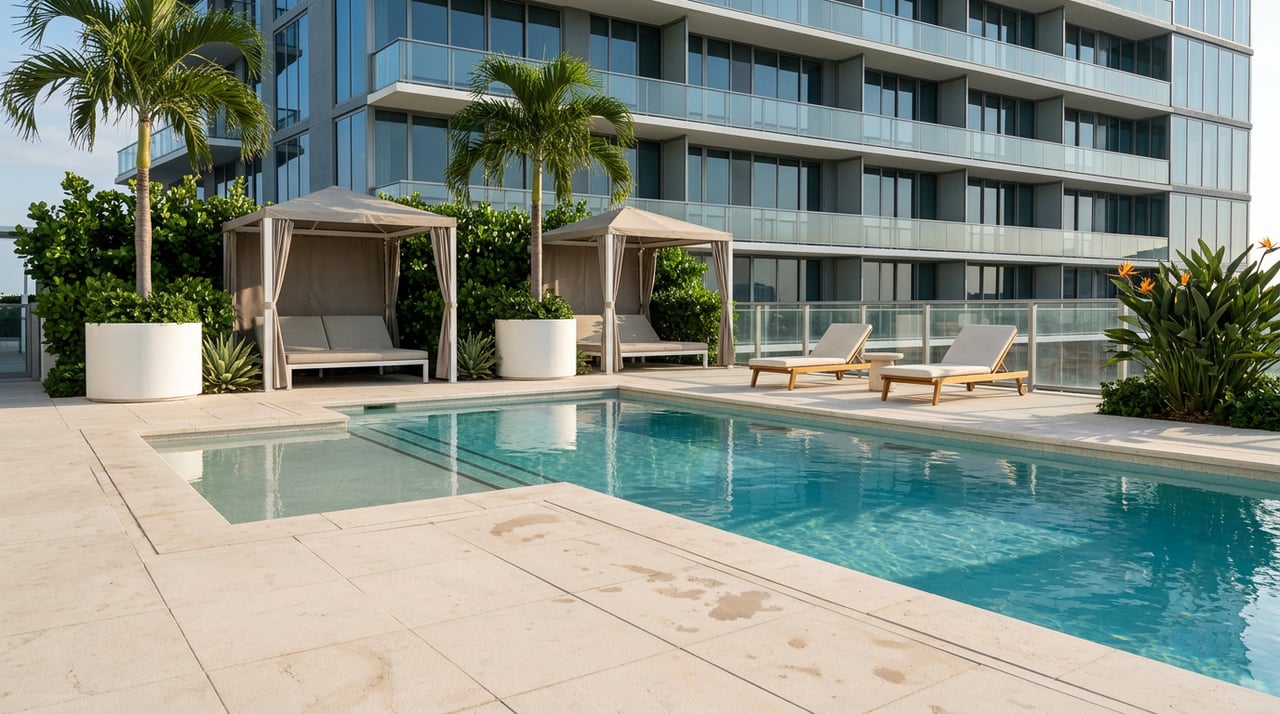
- Pools, gyms, community rooms, tennis, valet, and garages: Equipment servicing, cleaning, and staffing. Confirm hours, access rules, and whether there are extra fees for keys, storage, or reserved parking.
- Cable and internet bulk contracts: These can offset your personal bills. Ask when contracts renew, since changes can affect fees.
Special assessments
- What they are: One‑time charges when regular income and reserves are not enough for capital work. Review the history of assessments, any current or pending assessments, and board minutes explaining the cause. Frequent assessments are a red flag.
Documents to request before you buy
You, your agent, or your attorney should request these items to evaluate fees and risk:
- Current budget and the last 2 to 3 years of budgets.
- Most recent reserve study and any updates, plus reserve account balances.
- Actual financial statements for the last 2 to 3 years, including balance sheets.
- Board and member meeting minutes for the last 12 to 24 months.
- Association insurance declarations, including wind or hurricane deductible details.
- List of current and recent special assessments and any pending projects.
- List of litigation involving the association and status of any cases.
- Management contract and major vendor contracts for elevators, landscaping, and pool services.
- House rules, bylaws, and amendments that can affect use or assessments.
- Notices and minutes tied to major repairs or structural work.
- Delinquency information on assessments collected versus uncollected.
If any of these are missing, slowed, or incomplete, budget extra time and ask more questions.
How to compare buildings fairly
A fair comparison goes beyond the headline fee. Use a simple framework to normalize costs and factor in risk.
Step-by-step comparison method
- List inclusions and convert missing items to a monthly number. If one building includes water and cable but another does not, add your expected monthly cost to the second building’s fee for an apples‑to‑apples view.
- Normalize by size. Calculate monthly fee per square foot by dividing the fee by your unit’s square footage. This helps compare different unit sizes in the same building or between buildings.
- Isolate reserves. Identify how much of the monthly fee goes to reserves and compare the reserve balance to what the reserve study recommends. A weak reserve increases special assessment risk.
- Adjust for potential assessments. If board minutes or notices suggest a major project, estimate the likely per‑unit cost and prorate it over your planned holding period. Add this to your monthly comparison.
- Note insurance deductibles. A lower fee does not offset a very high wind deductible. Understand your potential share if a claim occurs.
Sample comparison example (illustrative)
- Two 1,200 sq ft units in different buildings.
Building A
- Monthly fee: 900 dollars. Includes water, cable, master insurance, pool, fitness center, and concierge.
- Reserve contribution: 200 dollars per month. Reserve balance is 450,000 dollars; the reserve study recommends 700,000 dollars.
- Wind deductible: 3 percent of building value.
- No pending special assessments or major litigation noted.
Building B
- Monthly fee: 650 dollars. Includes pool and exterior maintenance only. Water and cable billed to the owner.
- Reserve contribution: 100 dollars per month. Reserve balance is 120,000 dollars; the reserve study recommends 550,000 dollars.
- Wind deductible: 2 percent of building value.
- Board minutes reference parking garage repairs that may require a special assessment.
Normalize and adjust
- Monthly fee per sq ft: A = 0.75 dollars. B = 0.54 dollars.
- Add estimated owner cost for water and cable of 150 dollars to Building B: Effective fee becomes 800 dollars, or 0.67 dollars per sq ft.
- Reserve funded strength: A is about 64 percent of the recommended balance. B is about 22 percent. Building B carries higher special assessment risk.
Conclusion
- Building B looks cheaper at first, but after adjusting for utilities and reserve strength, Building A may offer lower risk and a more stable total cost.
North Palm Beach and Palm Beach County factors
Buying in a coastal market adds a few extra checks to your process.
Flood and wind exposure
Many North Palm Beach condos are in FEMA flood zones. Association master policies usually exclude flood, which means separate flood coverage may be needed. Confirm flood zone and elevation information and ask how the association handles storm preparation and claims. For wind or hurricane coverage, verify the deductible type and percentage since owner exposure can be large in a major storm.
Post‑Surfside inspections
After the 2021 collapse in Surfside, Florida increased oversight of older high‑rise buildings. Check the latest inspection requirements that apply to the building, and review any recent structural reports or recertifications on file with Palm Beach County or the Village of North Palm Beach. Minutes that mention concrete spalling, water intrusion, or parking garage repairs deserve close attention.
Permits and code compliance
Major repairs should be permitted and inspected through local building departments. Ask whether recent capital projects were completed with permits and whether final inspections passed. Permit history can reveal deferred maintenance or gaps in planning.
Insurance market context
Florida’s insurance market has seen premium increases and capacity shifts. Associations may respond with higher fees, reduced coverage, or higher deductibles. Review policy changes year over year and ask how the board is budgeting for future renewals.
Red flags that warrant deeper review
- Reserve study is older than 3 to 5 years or missing.
- Reserve balance is far below the study’s recommended level.
- Repeated operating deficits or transfers from reserves to cover operating costs.
- A pattern of special assessments over several years.
- High legal expenses or active litigation, especially related to construction or structure.
- Very high windstorm or flood deductibles, exclusions, or narrow coverage.
- Board minutes referencing structural deterioration, concrete spalling, garage issues, or water intrusion.
- High owner delinquencies that threaten cash flow and services.
A quick worksheet you can use
Create a simple worksheet so you can compare two or three buildings side by side. Include these items:
- Building and unit details: Address, unit number, floor, and square footage.
- Monthly condo fee and what it includes: Water, sewer, cable, internet, parking, concierge, pool, gym, pest control.
- Owner-paid utilities: Your monthly estimate for items not included.
- Reserve contribution: Monthly amount within the fee.
- Reserve strength: Current balance, date of the latest reserve study, and funded level versus the recommendation.
- Special assessments: Current amounts per unit and any pending projects discussed in minutes.
- Insurance details: Coverage overview and wind or hurricane deductible.
- Litigation status and delinquency overview.
- Normalized metrics: Fee per square foot, effective monthly cost after utility adjustments, and an optional risk score of low, medium, or high.
Update this worksheet as you receive documents. It will keep your decision anchored in facts rather than first impressions.
Final thoughts and next steps
Evaluating condo fees in North Palm Beach is about clarity and risk management. When you read the budget line by line, check reserves against a recent study, and normalize costs for what is included, you can compare buildings with confidence. Add in local factors like flood exposure, wind deductibles, and inspection history, and you will see the full picture of your true monthly and long‑term cost.
If you want a calm, expert process from first look to closing and beyond, our team is here to help. We guide you through document reviews, coordinate with your legal and tax advisors, and build a clean comparison so you can decide with confidence. For ongoing ownership, we also support property and rental management and turnkey setup. Connect with The Ana Vega Group to start your North Palm Beach condo search on the right foot.
The Ana Vega Group – Schedule a VIP Consultation. Hablamos español.
FAQs
What do North Palm Beach condo fees typically include?
- Fees usually cover building operations like management, common‑area utilities, maintenance, reserves for major repairs, master insurance, and amenities. Some buildings also include water, sewer, cable, or internet.
How can I tell if reserves are adequate in a Palm Beach County condo?
- Compare the current reserve balance and contributions to the latest reserve study’s recommended funding level. A large gap suggests higher risk of special assessments.
Are flood costs included in a condo’s master insurance policy in coastal Florida?
- Association master policies commonly exclude flood. You may need separate flood coverage depending on location and flood zone.
How do hurricane deductibles affect my bottom line as an owner?
- Many Florida policies use percentage wind or hurricane deductibles. In a large claim, owners can face significant out‑of‑pocket costs based on the deductible and the building’s allocation method.
Which documents should I request before buying a condo in North Palm Beach?
- Ask for budgets, financial statements, the latest reserve study, insurance declarations, meeting minutes, litigation disclosures, vendor contracts, bylaws, and details on any special assessments or major projects.
What are common red flags when I review condo financials?
- Missing or outdated reserve studies, low reserve balances, repeated operating deficits, frequent special assessments, high legal costs, structural repair notes, and high wind or flood deductibles are all signs to investigate further.